A Comprehensive Guide to the Various Types and Applications of Aluminum Castings
Aluminum castings are essential parts in different industries, recognized for their light-weight and resilient residential properties. Various casting techniques, such as sand, pass away, and investment casting, offer unique advantages customized to particular applications. Recognizing these procedures is vital for picking the right approach for a project. Each strategy has its distinct advantages, influencing layout and manufacturing options. The exploration of these methods exposes a much deeper understanding right into their influence on modern-day manufacturing.
Review of Aluminum Castings
Aluminum castings are important parts in various sectors, recognized for their lightweight and corrosion-resistant homes. These castings are produced with procedures that permit intricate styles and high dimensional precision. The versatility of aluminum makes it an excellent option for a series of applications, from auto parts to customer electronics. Because of its excellent thermal and electrical conductivity, aluminum is also favored in electrical housings and warmth sinks. Furthermore, aluminum castings can be treated with numerous surface area finishes, boosting their aesthetic appeal and longevity. The material's recyclability includes in its sustainability credentials, making it an ecologically pleasant alternative. Furthermore, the accessibility of various aluminum alloys permits suppliers to customize the mechanical buildings to details needs, supplying boosted toughness or improved resistance to wear. In general, aluminum castings play a considerable function in modern-day production, adding to the efficiency and performance of numerous items across diverse industries.
Sand Casting: Process and Applications
While different casting approaches exist, sand casting remains among one of the most extensively utilized strategies because of its simpleness and flexibility. This procedure includes creating a mold from a mixture of sand and a binding representative, enabling the manufacturing of complicated shapes with high dimensional accuracy. The aluminum is melted and put right into the mold, where it takes the desired kind as it cools down and strengthens.
Sand casting is especially effective for generating big parts and reduced to tool volume runs, making it suitable for various sectors, consisting of vehicle, aerospace, and durable goods. Its flexibility allows for the casting of detailed styles, accommodating varied specs. Additionally, sand molds can be reused several times, improving cost-effectiveness. The simplicity of sourcing materials and the fairly low configuration expenses additionally contribute to its prevalent adoption. On the whole, sand casting plays an essential role in the aluminum casting landscape, cultivating development and efficiency.
Die Casting: Advantages and Makes use of
Die casting offers numerous advantages that make it a recommended method for creating aluminum components in different industries. This process permits high-volume manufacturing with phenomenal dimensional accuracy and surface area finish. The quick solidification of aluminum during die casting leads to a strong and sturdy item, minimizing the requirement for considerable machining or finishing procedures.
In addition, die casting allows the manufacturing of complicated forms and elaborate styles, which can be testing to achieve with other casting techniques. The reliable use of materials decreases waste, making it a cost-effective remedy for makers.
Applications of die casting period numerous sectors, including automobile, aerospace, and customer electronic devices, where light-weight and high-strength elements are essential. Overall, die casting sticks out for its capacity to supply top quality, performance, and convenience in aluminum component manufacturing, solidifying its role in modern manufacturing practices.
Investment Casting: Accuracy and Information
Financial investment casting is an accuracy manufacturing process that permits for detailed layouts and thorough attributes in aluminum parts (Aluminum Casting). This technique uses countless benefits, including high dimensional precision and a smooth surface area coating. Its adaptability makes it suitable throughout different industries, from aerospace to medical devices
Process Summary
The financial investment casting procedure stands apart for its capacity to generate complex aluminum elements with amazing precision and detail. This technique begins with developing a wax or polymer pattern that is a reproduction of the preferred part. Next off, the pattern is covered with a ceramic shell, which is after that heated up to set. When the shell is established, the wax is thawed away, leaving a tooth cavity in the shell. Fluid aluminum is put into this cavity, filling it to form the final part. After cooling down, the ceramic shell is damaged away, exposing the actors part. This procedure permits complicated geometries and fine surface area finishes, making it ideal for different applications, from aerospace to automotive sectors.
Advantages of Financial Investment Casting
One of the main benefits of financial investment casting depends on its capacity to provide high-precision parts with complex details. This technique enables the creation of intricate geometries that are commonly unattainable through various other casting techniques. Financial investment casting minimizes the demand for comprehensive machining, lowering material waste and manufacturing time. Furthermore, it allows making use of various aluminum alloys, boosting the convenience of the end product. The procedure is defined by a smooth surface area coating, which can bring about improved performance and aesthetic appeals. Investment casting is well-suited for both tiny and big manufacturing runs, fitting a broad variety of markets. On the whole, its precision and effectiveness make investment casting a preferred option for producing parts calling for exact specifications.
Applications in Market
While different casting techniques serve particular functions, investment casting stands apart for its extensive applications across multiple markets because of its unequaled precision and detail. This technique is particularly preferred in aerospace and auto fields, where complex elements require specific specifications for safety and security and efficiency. Financial investment casting enables for the production of intricate forms, such as wind turbine blades and engine parts, that traditional approaches can not achieve. Additionally, medical device suppliers use investment casting for creating highly comprehensive instruments and implants, ensuring biocompatibility and capability. The electrical and electronic devices markets also profit, creating parts like real estates and ports that demand great resistances. Overall, financial investment casting's convenience and precision make it a crucial process in modern production throughout diverse areas.
Contrast of Casting Methods
Sand Casting Advantages
Sand casting offers a number of benefits over various other casting approaches, particularly when it pertains to flexibility and cost-effectiveness. This method permits the manufacturing of complex shapes and big elements without the requirement for costly tooling. In addition, the sand made use of in this procedure is conveniently offered and economical, making it an eye-catching alternative for both tiny and huge manufacturing runs. The capacity to recycle sand advertises sustainability and minimizes material costs. Furthermore, sand casting fits a range of aluminum alloys, improving its versatility for different applications. The procedure is additionally reasonably basic, which adds to shorter preparations and adaptability in production. These aspects make sand casting a favored choice for many sectors looking for trustworthy and economical solutions.
Die Casting Performance
Although numerous casting techniques are offered, pass away casting stands apart for its effectiveness, specifically in high-volume manufacturing scenarios. This approach uses high-pressure forces to infuse liquified aluminum into a mold and mildew, leading to fast cycle times and consistent item high quality. Contrasted to sand casting and investment casting, die casting considerably minimizes product waste and allows for detailed layouts with tight tolerances. The capacity to produce big amounts of components promptly makes it suitable for markets such as automotive and customer items. On top of that, die casting can assist in making use of more economical alloys, further boosting its cost-effectiveness. On the whole, the efficiency site web of die casting makes it a recommended option for producers intending to optimize both manufacturing speed and high quality.
Investment Casting Precision
Financial investment casting is commonly identified for its extraordinary accuracy in producing complicated shapes and complex details. This method includes producing a wax pattern, which is coated in a ceramic covering, and subsequently melted away, leaving an accurate tooth cavity for liquified aluminum. Contrasted to various other casting techniques, such as sand casting or pass away casting, financial investment casting uses tighter resistances and a smoother surface area coating. This accuracy makes it ideal for applications requiring high accuracy, such as aerospace and medical device components. While the initial setup costs may be greater, the lasting advantages consist of minimized machining demands and constant high quality. Financial investment casting stands out as a recommended option for complex designs and requiring requirements in different industries.
Industry Applications of Aluminum Castings
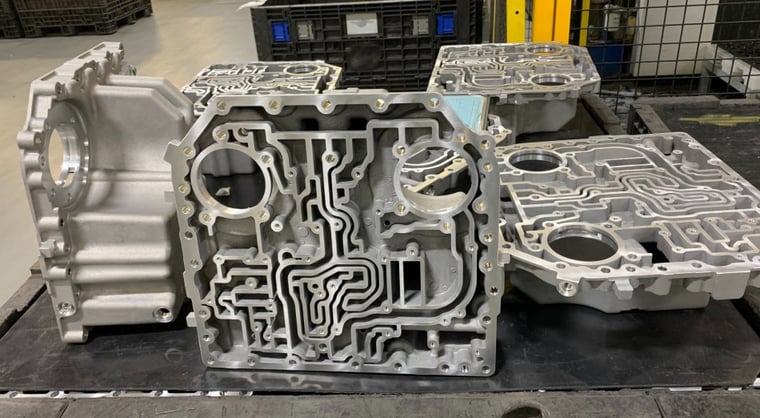
Aluminum castings play an essential duty throughout many markets due to their light-weight, corrosion-resistant properties and superb strength-to-weight proportion. In the automotive field, aluminum castings are extensively utilized for engine parts, transmission real estates, and structural parts, adding to fuel performance and performance. The aerospace sector gain from aluminum castings in airplane frameworks, engine mounts, and interior installations, where weight reduction is critical.
Furthermore, the consumer electronic devices sector makes use of aluminum castings for enclosures and parts, improving resilience while keeping a sleek visual. In the construction sector, aluminum castings are employed in architectural components, home window structures, and structural assistances, giving durability versus weathering. The aquatic field favors aluminum castings for boat hulls and installations due to their resistance to deep sea deterioration. In general, aluminum castings use functional solutions, satisfying diverse demands across numerous applications while keeping high performance and reliability.
Future Patterns in Aluminum Casting Innovation
As industries remain to advance, advancements in aluminum casting technology are positioned to improve producing processes and product layout. Arising patterns include the integration of automation and expert system, streamlining manufacturing and improving quality control. 3D printing is also obtaining grip, enabling more intricate geometries and decreased waste, thereby advertising sustainability. Furthermore, the development of high-performance alloys is increasing the applications of aluminum castings, allowing industries to fulfill rigorous efficiency requirements.
One more significant pattern is the boosting focus on recycling and the round economic situation, with technologies aimed at reusing aluminum scrap efficiently. Sector gamers are likewise purchasing clever manufacturing methods, incorporating IoT for real-time monitoring and anticipating maintenance. Developments in surface area treatment innovations are boosting the Extra resources resilience and visual charm of aluminum castings. Jointly, these trends symbolize a transformative duration in aluminum casting, driving efficiency, sustainability, and advancement throughout various industries.
Often Asked Inquiries
What Are the Environmental Effects of Aluminum Casting Processes?
The ecological impacts of aluminum casting processes include greenhouse gas discharges, power intake, and waste generation. These factors add to air and water contamination, triggering the need for lasting techniques and enhanced source management in the sector.
Just How Can Aluminum Castings Be Recycled Effectively?
Reliable recycling of aluminum castings entails accumulating scrap, getting rid of contaminants, and melting the aluminum to produce new castings. This procedure conserves power, lowers waste, and minimizes ecological influences, advertising a much more sustainable production cycle.
What Is the Common Lifespan of Aluminum Castings?
The typical lifespan of aluminum castings differs substantially, typically lasting in between 20 to half a century depending upon environmental factors, alloy structure, and application. Their longevity makes them ideal for various requiring commercial and architectural usages.
Are There Any Wellness Threats Connected With Aluminum Casting?
Problems regarding wellness threats connected with aluminum casting include possible direct exposure to fumes and dust. Long term breathing may cause breathing problems, while skin contact can create inflammation. Proper safety the original source and security steps are important to mitigate these dangers.
Exactly How Do Aluminum Castings Contrast to Other Products in Stamina?
Aluminum castings show a positive strength-to-weight ratio compared to several materials, consisting of steel and plastics (Aluminum Casting). They are lightweight yet solid, making them optimal for applications requiring toughness without excessive weight, such as vehicle and aerospace components
Comments on “Aluminum Casting for engine blocks: Real-world examples”